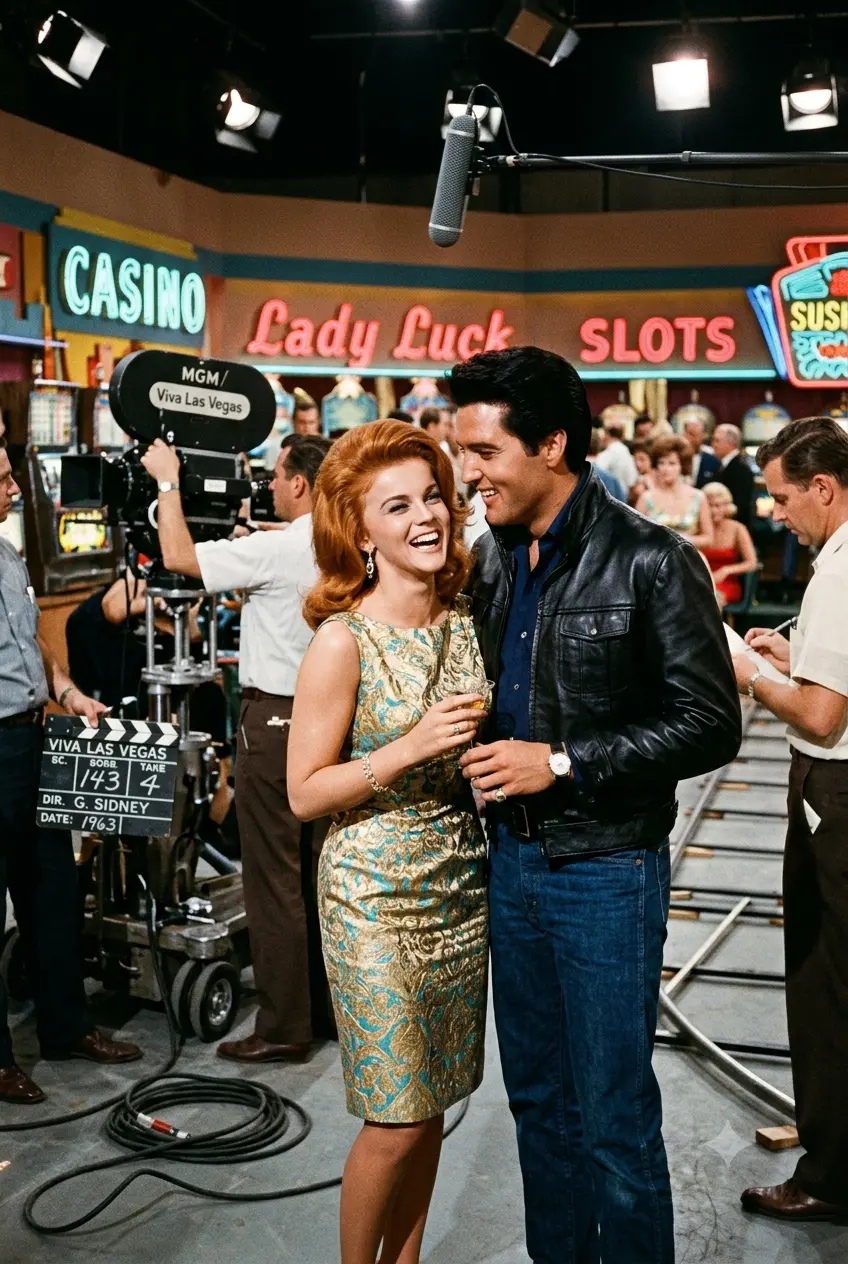
Elvis and Ann-Margret chemistry wasn’t something a director had to manufacture. By most accounts from the people who were actually there, it was real, immediate, and impossible to miss the moment the two stars stepped in front of a camera together. “Viva Las Vegas” turned into one of Elvis’s most beloved films largely because of it, and the story behind that chemistry is a lot more layered than a simple on-set romance.
This is the real story of what happened during the making of “Viva Las Vegas,” on camera and off, and why that particular pairing still gets talked about six decades later.
Quick Answer
Elvis Presley and Ann-Margret developed genuine off-screen chemistry while filming “Viva Las Vegas” in 1963, sparked by shared backgrounds, a mutual love of music and motorcycles, and an instant creative connection that carried directly onto the screen. Their brief real-life romance, combined with electric dance numbers, is widely credited with making the film one of Presley’s best.
Two Rising Stars, One Unlikely Pairing
By 1963, Elvis was already the biggest name in music, but his film career had settled into a fairly predictable formula. Ann-Margret, meanwhile, was a rising star known for her singing, dancing, and screen presence, often described in the press at the time as “the female Elvis Presley.”
Interestingly, Elvis reportedly wasn’t thrilled about being paired with her at first, even though he was flattered by the comparison. Some accounts suggest early tension on set, including a story about a crew member who had previously dated Ann-Margret and seemed to favor her with better lighting and camera angles, prompting a complaint from Elvis that eventually got sorted out through the production. Once that friction cleared, though, the two performers reportedly grew close fast.
Filming Under the Desert Sun
Production on “Viva Las Vegas” moved between Los Angeles and Las Vegas over the summer of 1963. The cast and crew checked into the Sahara Hotel for location filming, which ran through most of July before the production shifted back to MGM’s studios for several more weeks of work into early September.
Ann-Margret later described the early chemistry between her and Elvis as something that started small and grew fast. In her own account, she suggested that whatever spark existed between their characters, Lucky and Rusty, may have looked at first like nothing more than two people reacting to the desert heat. That didn’t last. Cast, crew, and outside observers all started noticing something real developing between the two stars almost immediately.
An Associated Press correspondent covering the production at the time noted how the two would hold hands, slip away into Presley’s dressing room between takes, and eat lunch privately together, details that quickly caught the attention of entertainment reporters.
Chemistry Built Around Music
Both Elvis and Ann-Margret later pointed to music itself as the real foundation of their connection. According to Ann-Margret, the two of them experienced music the same way, on a purely physical, instinctive level, and that shared response showed up clearly whenever the cameras rolled on a musical number.
That connection is most visible in the film’s dance sequences, particularly the now-famous “The Lady Loves Me” number, which is frequently singled out as the moment the film’s real chemistry comes through most clearly. Choreographer David Winters built several sequences specifically designed to let both performers showcase their natural movement and energy together, and the results are widely considered some of the liveliest dance scenes of Presley’s film career.
The Romance Behind the Cameras
The off-screen relationship between Elvis and Ann-Margret became one of Hollywood’s worst-kept secrets almost as soon as filming wrapped. Gossip columnists picked up on it quickly, and even Elvis’s hometown newspaper, the Memphis Press-Scimitar, ran headlines speculating about a romance between the two stars.
By several accounts, the relationship continued for a period after production ended. Longtime Elvis associate Jerry Schilling has described seeing Ann-Margret let herself into Presley’s California home late one night that fall, using her own key. Other people close to Elvis at the time have described a private, ongoing correspondence between the two, separate from their public personas entirely.
Ann-Margret confirmed the relationship herself decades later in her 1994 memoir, describing an immediate, powerful connection that both of them recognized from their very first meeting on set. She wrote about sensing early on that something serious was developing between them, well before filming had even properly begun.
Why the Relationship Couldn’t Last
At the time of filming, Elvis was already in a relationship with Priscilla Beaulieu, whom he would later marry in 1967. The overlap between his real relationship and his very public connection with Ann-Margret created real tension, both privately and in the press.
According to Priscilla’s own account in her 1985 book “Elvis and Me,” the gossip surrounding Elvis and Ann-Margret became especially difficult after columnists mistakenly reported the two were engaged to be married. That kind of coverage put pressure on Elvis to manage two very different relationships at once, something that ultimately proved unsustainable.
Ann-Margret later wrote candidly about the end of the romance, describing it as a situation shaped by other factors in Elvis’s life that pulled him away from her, factors she said she understood even if the overall situation remained difficult for her personally.

A Connection That Outlasted the Breakup
Even after the romantic relationship ended, Elvis and Ann-Margret reportedly stayed close for the rest of his life. Film historian Ben Mankiewicz has pointed to their shared small-town backgrounds, their mutual love of motorcycles, and a common discomfort with the spotlight as reasons their bond held up long after the romance itself faded.
By most accounts from people close to Elvis, Ann-Margret remained one of the most significant people in his life outside of his immediate family, a friendship that persisted through his marriage, his divorce, and the rest of his career.
What Made It Work On Screen
Whatever happened behind the scenes, none of it would matter if it hadn’t translated to the screen, and it clearly did. Critics and fans alike consistently point to the believable spark between Lucky and Rusty as the reason “Viva Las Vegas” holds up better than most of Presley’s other films from the era.
A few specific elements are usually credited for that on-screen success:
- Genuine physical chemistry during the dance numbers, particularly sequences built to let both stars move freely together
- Playful, natural-feeling banter between the two characters that felt less scripted than most of Presley’s earlier film romances
- Shared musical instincts, with both performers reacting to the music in real time rather than following rigid choreography alone
- A visible comfort level between the two leads that came through even in quieter, non-musical scenes
Even Colonel Tom Parker, Elvis’s notoriously controlling manager, reportedly had concerns during production, unhappy that Ann-Margret seemed to be getting as much camera attention as Elvis himself. That complaint, whether fair or not, is itself a good indicator of just how much presence she brought to the film.
The Film’s Lasting Legacy
“Viva Las Vegas” opened in the summer of 1964 and became a genuine box office hit, landing among the top movies of the year. It remains one of the most fondly remembered films of Presley’s Hollywood career, and Ann-Margret’s performance is widely credited with elevating it well above the standard formula of his other movie musicals from that period.
Sixty years later, the film’s title song is still instantly recognizable as musical shorthand for Las Vegas itself, and the chemistry between its two stars remains a large part of why the movie continues to hold up for new audiences discovering it today.
FAQ
Did Elvis Presley and Ann-Margret actually date? Yes. Multiple firsthand accounts, including Ann-Margret’s own memoir, confirm a real romantic relationship developed between the two stars during and after filming “Viva Las Vegas” in 1963.
Was Elvis in another relationship at the time? Yes. Elvis was involved with Priscilla Beaulieu during filming, and the couple later married in 1967. The overlapping relationships created significant tension once gossip about Ann-Margret spread publicly.
Why did the Elvis and Ann-Margret romance end? According to Ann-Margret’s own account, the relationship ended due to other pressures in Elvis’s life, though she noted he had always been honest with her about the situation.
Did Elvis and Ann-Margret stay friends after their romance ended? Yes. By most accounts, the two remained close for the rest of Elvis’s life, bonded by similar backgrounds and shared interests outside of their romantic history.
What’s considered the best example of their on-screen chemistry? The “The Lady Loves Me” dance number is frequently cited as the clearest example of the natural chemistry and energy both stars brought to the film.
Was “Viva Las Vegas” a box office success? Yes. The film performed well upon its 1964 release and ranked among the top-grossing movies of that year, and it remains one of Presley’s most popular films with fans and critics today.
Editor’s Opinion
this one is just a genuinely sweet hollywood story even with the messy parts. u can tell from every account that this wasnt some studio-made showmance, these two actually connected over real stuff, small towns, motorcycles, music. i think thats why the movie still holds up, you cant really fake that kind of chemistry on camera no matter how good the choreography is. sad it couldnt work out long term but nice that they stayed close anyway, feels like a rare genuine hollywood friendship.
One Comment
Leave a ReplyOne Ping
Pingback:Elvis Returns to the Strip: Inside the High-Tech Las Vegas Show