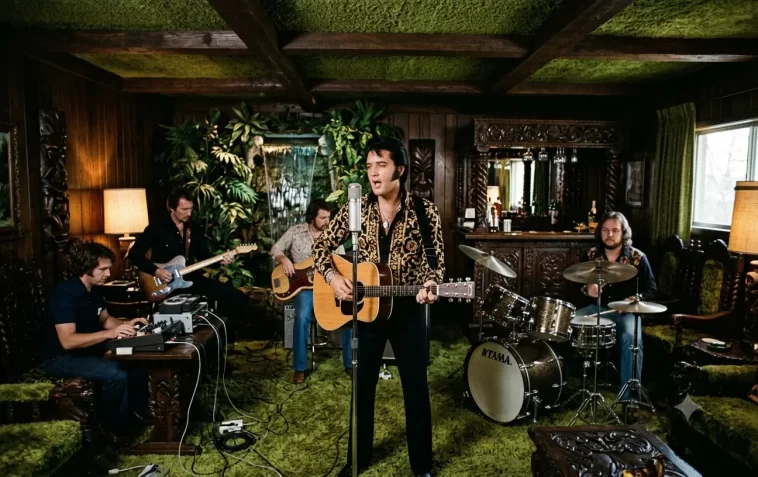
Graceland’s Jungle Room started life as nothing more than a screened-in porch. Today it’s one of the most photographed, most talked-about rooms in American pop culture, a shag-carpeted, waterfall-equipped tiki den that somehow also became one of the last places Elvis Presley ever recorded music. Few rooms in any house anywhere carry that much legend packed into four walls.
This is the real story behind the room: how it was built, what actually happened during its famous recording sessions, and which parts of its legend are fact versus fan folklore.
Quick Answer
Graceland’s Jungle Room began as an enclosed patio in the 1960s before Elvis Presley redecorated it in 1974 with Polynesian-style furniture, green shag carpet, and an indoor waterfall. In 1976, RCA turned the room into a working studio, where Elvis recorded some of the final tracks of his career.
From Screened Porch to Family Den
When Elvis bought Graceland in 1957, the space that eventually became the Jungle Room didn’t exist in any recognizable form. It started as an open, screened porch attached to the back of the house, mostly used as an outdoor sitting area.
During one of Elvis’s ongoing home improvement projects in the 1960s, that porch got enclosed and turned into an actual interior room. In 1965, he had a built-in rock waterfall installed, giving the space its first real hint of the tropical, tiki-inspired look it would later become famous for.
For years afterward, it functioned as a fairly ordinary family den. Elvis kept large sofas and an oversized television in there, and it became a favorite spot to relax with the group of friends and staff commonly nicknamed the Memphis Mafia. He reportedly liked to eat breakfast in the room and, on at least one well-documented occasion, shot out a television set with a revolver when something on screen annoyed him.
The 30-Minute Shopping Spree That Created the Legend
The room most people picture when they hear “Jungle Room” didn’t exist until 1974, when Elvis went furniture shopping at a Memphis store called Donald’s.
According to the most widely repeated account, Elvis stumbled onto a set of Polynesian-style Witco furniture, carved from singed cypress wood, and was instantly drawn to it. The pieces reminded him of Hawaii, a place he loved from his vacations, film shoots, and performances there. He reportedly bought the entire collection on the spot, in a shopping trip said to have lasted around thirty minutes.
There’s a popular side story attached to this purchase. As the tale goes, Elvis’s father, Vernon, had seen the exact same furniture set in the store earlier that same day and told Elvis how ugly he thought it was, with no idea his son had already bought the whole thing. Whether that anecdote is completely accurate or slightly embellished over the years, it’s been repeated often enough that it’s become part of the room’s permanent folklore.
The Architecture and Design Details
Once installed, the redesigned den combined several distinct elements that, together, created a look unlike anything else in the house:
- Green shag carpet covering not just the floor but sections of the ceiling as well, a bold styling choice even by mid-1970s standards
- Carved wood Witco furniture, heavy and dark, with a distinctly tropical, tiki-bar feel
- Faux fur upholstery on several pieces, adding to the room’s exotic, almost jungle-like texture
- An indoor rock waterfall, installed nearly a decade before the furniture overhaul, that continued to anchor the room’s centerpiece
- A small bar area with stools, decorated with tiki-style carvings
Elvis himself never called it the Jungle Room. To him, it was simply “the den.” The now-famous nickname was coined by a journalist covering the mansion after Graceland opened to the public in 1982, five years after his death, and it stuck permanently.
The room fit into a broader design period at Graceland from the mid-1970s that some Presley historians have nicknamed the house’s “red period,” referring to the bright scarlet carpeting that flooded much of the mansion’s hallways around the same time. One biographer later described the overall look of that era at Graceland as an extravagant exercise in aesthetic excess, though visitors to this day tend to find the Jungle Room more charming than gaudy.
When the Den Became a Recording Studio
The Jungle Room’s most historically significant chapter happened almost by accident. By February 1976, Elvis had grown increasingly reluctant to record in traditional studios, and RCA needed new material. Rather than fight that reluctance, the label brought a mobile recording truck straight to Graceland.
The setup wasn’t smooth from the start. The RCA mobile studio truck, dispatched all the way from Nashville, broke down just outside Memphis and had to be towed the rest of the way through Graceland’s gates, not exactly the most promising beginning for a major recording session.
Once the truck arrived, the crew turned the den into a makeshift live room. Furniture was pushed aside, the waterfall was switched off to cut down on background noise, and blankets were hung around the space to help absorb sound. As it turned out, the thick green shag carpet covering the floor and ceiling worked surprisingly well as a natural sound absorber, giving the room unexpectedly solid acoustics for a space never designed with music in mind.
On February 2, 1976, recording finally began. More than a dozen musicians and backing vocalists packed into the room alongside Elvis, with no isolation booths or vocal separation of the kind found in a normal studio. Guitarist James Burton, who played with Elvis for years, later explained that Elvis simply preferred having his musicians and singers close by rather than separated in different rooms.
What Came Out of Those Sessions
The results of the Jungle Room sessions turned out to be some of the most emotionally resonant recordings of Elvis’s later career. Tracks recorded there ended up on his final studio albums, including songs like “Moody Blue,” “Solitaire,” and a raw, stripped-down version of “Hurt” that fans and critics still point to as one of his most affecting late performances.

Sixteen songs from Elvis’s last two studio albums were captured in that room. Decades later, in 2016, RCA released a compilation called “Way Down in the Jungle Room,” gathering together tracks and outtakes from those sessions for fans who wanted the full picture of what happened inside that shag-carpeted den.
For a room built around plastic plants and carved tiki furniture, it’s a genuinely significant piece of recording history, arguably the closest thing to a proper home studio Elvis ever used.
Myths Worth Clearing Up
A few details about the Jungle Room get exaggerated or garbled in retellings, so it’s worth separating legend from documented fact:
Myth: Elvis called it the Jungle Room. He didn’t. He referred to it as the den. The nickname came from press coverage after the mansion became a public museum.
Myth: The furniture was imported from Hawaii. It wasn’t. Despite the strong Polynesian styling and Elvis’s personal connection to Hawaii, every piece of furniture in the room was purchased locally in Memphis.
Myth: The room was always the tiki-style den people know today. It wasn’t. The space existed for close to a decade first as a screened porch and then as a fairly conventional family den, years before the 1974 furniture overhaul gave it its now-iconic look.
Why the Jungle Room Still Draws Visitors
Nearly fifty years after Elvis bought that furniture in a half-hour shopping trip, the Jungle Room remains one of the most requested stops on the Graceland mansion tour. Its exaggerated, unapologetic style captures something genuine about Elvis’s personality that more conventional rooms in the house simply don’t.
It’s also a rare example of a rock star’s private living space doubling as a meaningful piece of recording history. Most fans touring Graceland are standing in the exact room where some of Elvis’s final vocal performances were captured, surrounded by the same green shag carpet and carved wood furniture that were there the night he recorded them.
FAQ
When was Graceland’s Jungle Room built? The space started as an enclosed patio in the 1960s, but the version most people recognize today, with its Polynesian-style furniture and green shag carpet, was created after Elvis redecorated it in 1974.
Did Elvis actually call it the Jungle Room? No. Elvis referred to the space simply as “the den.” The nickname “Jungle Room” was coined by a journalist after Graceland opened for public tours in 1982.
What songs were recorded in the Jungle Room? Elvis recorded sixteen songs there during February 1976 sessions, including tracks like “Moody Blue,” “Solitaire,” and “Hurt,” which appeared on his final studio albums.
Was the Jungle Room furniture from Hawaii? No. Although the Polynesian-inspired style was meant to evoke Hawaii, all of the furniture was purchased at a store called Donald’s in Memphis, Tennessee.
Why does the Jungle Room have shag carpet on the ceiling as well as the floor? It was a bold design choice tied to the room’s overall tiki aesthetic, and it turned out to have an unexpected benefit years later, helping absorb sound during the 1976 RCA recording sessions.
Can visitors still see the Jungle Room today? Yes. It remains one of the most popular stops on the official Graceland mansion tour, preserved largely as it looked during Elvis’s lifetime.
Editor’s Opinion
the jungle room is just peak 70s energy honestly, green carpet on the CEILING, who does that. but i kinda love that it wasnt some fancy planned studio, it was literally just his den with blankets hung up for sound. that’s so much more elvis than a real nashville studio would of been. makes the room feel less like a museum piece and more like a real place where a tired guy just wanted to record music close to home, surrounded by his friends.