Elvis Presley Army Sergeant 1960 — not everyone remembers this chapter of the story, and that’s precisely what makes it worth telling. When Elvis Presley completed his service in the United States Army, he left with the rank of Sergeant, E-5. It was not a title bestowed because of his fame, his record sales, or his name on a marquee. It was earned — through the same discipline, the same drills, and the same daily grind demanded of every other young soldier standing beside him.
In 1960, he came home with an honorable discharge and something the spotlights had never given him: the quiet satisfaction of a commitment fully kept.
Stepping Away From Everything
To understand what Elvis’s military service meant, you have to appreciate what he walked away from to do it.
By 1958, when he received his draft notice, Elvis Presley was one of the most famous human beings on the planet. Heartbreak Hotel, Hound Dog, Jailhouse Rock — the hits had come in waves. His television appearances had broken viewership records. Hollywood had come calling, and his film career was already building momentum.
He had every reason, and arguably every means, to find a way around service. Special assignments, entertainment roles, and morale-boosting positions were offered to him — arrangements that would have kept him visible, comfortable, and largely removed from the realities of military life.
He turned them down.
Elvis Presley chose to serve as a regular soldier. No exceptions. No special treatment. He put on the uniform and went where the Army sent him.
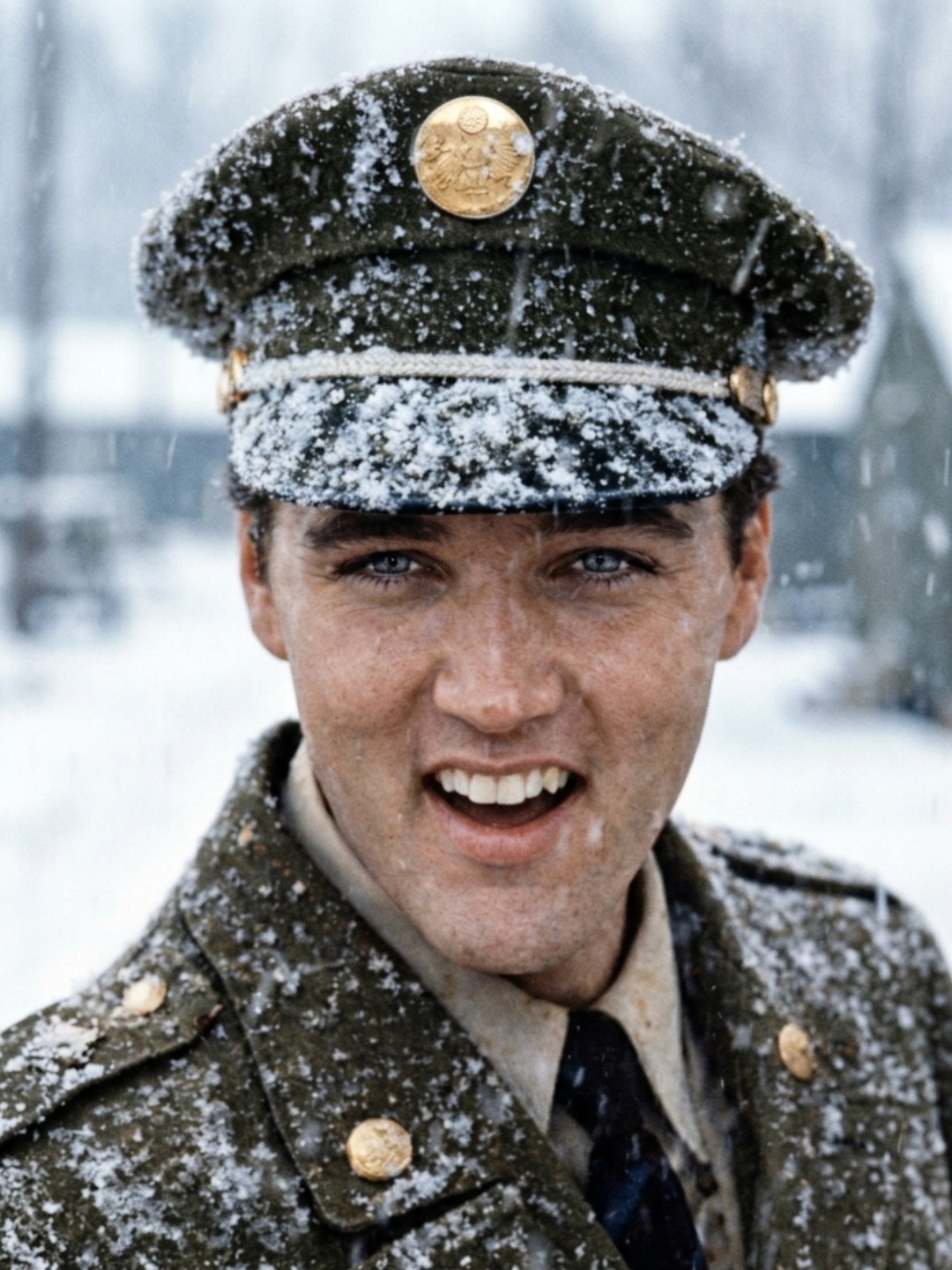
Friedberg, Germany: Life Without the Spotlight
Elvis was stationed in Friedberg, Germany, assigned to the 3rd Armored Division. His daily life there looked nothing like anything he had known before.
Early reveille. Rigorous physical training. The unglamorous, repetitive work of military routine — maintenance, drills, inspections, the slow accumulation of days that form the backbone of military life. He trained in a tank unit, working alongside men who had no particular interest in his chart positions and no patience for star treatment.
There were no cameras in the barracks. No fan mail delivered to the motor pool. No one setting up a microphone or adjusting stage lights. Just a young man from Tupelo, Mississippi, doing what was asked of him.
By every account from the men who served beside him, Elvis integrated into the unit with a naturalness that surprised those who expected otherwise. He pulled his weight. He did the chores. He showed up for the early mornings without complaint.
He was not, to his fellow soldiers, the King of Rock and Roll. He was a comrade. Someone who could be counted on.
Humility That Nobody Had to Manufacture
The word that comes up most consistently when veterans of Elvis’s unit recalled serving with him is one that doesn’t normally attach itself to pop stars: humility.
He worked quietly. He didn’t seek recognition. He didn’t leverage his fame for favors or attempt to separate himself from the ordinary rhythms of military life. When the unit ate, he ate the same food. When orders came down, he followed them like everyone else.
This was not performance. There was no audience for it.
That distinction matters enormously. Humility displayed in front of cameras costs nothing. Humility in a barracks in Germany, where no one is watching and nothing is being recorded, is the real thing. And by all credible accounts, that is exactly what Elvis brought to his service.
The brotherhood that forms among people living through shared difficulty far from home is something that cannot be faked or bought. Elvis earned his place in it — and the men who served with him remembered that long after the uniforms were put away.
What He Gained That No Stage Could Give Him
Elvis returned to the United States in March 1960 a changed man — not in the ways the press expected or the public necessarily recognized, but in ways that mattered deeply.
Two years of discipline, accountability, and the experience of being genuinely ordinary had left their mark. He had lived without applause and found that he could. He had done difficult things without recognition and discovered that doing them still mattered. He had stood shoulder to shoulder with people who cared nothing for his fame and had been accepted on entirely different terms.
That kind of experience builds something in a person that success alone never can.

The confidence Elvis carried back onto the stage in 1960 — and the particular quality of ease he displayed in his live performances throughout that decade and the next — was not purely the confidence of a man who had always been adored. It was also the quieter, steadier confidence of someone who had faced ordinary challenges and met them without flinching.
The Comeback That Meant More Than It Seemed
When Elvis returned to civilian life and stepped back into his career, the world received him with open arms.
It’s Now or Never and Are You Lonesome Tonight — both released in 1960 — were massive hits. His film career resumed and accelerated. The momentum that military service had paused came flooding back almost immediately.
But Elvis himself was different. Those close to him noted it. His approach to his work, his interactions with the people around him, the way he carried himself — all of it reflected something that had been added during those two years in Germany. A depth. A groundedness. A sense of proportion that comes from having genuinely put something ahead of personal comfort.
He was still the voice the world adored. But he was also now a man who had chosen duty over ease and come through it intact.
A Legacy Shaped by More Than Music
The story of Sergeant Elvis Presley, E-5, matters because it complicates the simple version of who he was.
The simple version is the one everyone knows: the swiveling hips, the curled lip, the rhinestone jumpsuits, the sold-out arenas, the cultural earthquake that reshaped American music and popular culture forever.
All of that is true. All of that is real.
But so is the young man who turned down comfort and chose service. Who ate the same meals as everyone else in Friedberg. Who cleaned the same equipment, followed the same orders, earned the same rank through the same effort. Who came home not with headlines about what he had sacrificed, but with an honorable discharge and a quiet sense of duty fulfilled.
Greatness, the real kind, is always measured in the moments when no one is watching. When no camera records the choice. When the decision is made in private and the world doesn’t notice until much later, if ever.
Elvis Presley knew something about that kind of greatness. The music is the legacy the world hears. The service is the legacy that explains the man behind it.
FAQ
What rank did Elvis Presley achieve in the US Army? Elvis Presley was honorably discharged from the United States Army in March 1960 with the rank of Sergeant, E-5 — a rank he earned through standard military performance, not through any special accommodation for his fame.
Where was Elvis Presley stationed during his military service? Elvis was stationed in Friedberg, Germany, serving with the 3rd Armored Division. He lived in standard military housing and participated in regular unit duties and training.
Did Elvis Presley receive any special treatment in the Army? No. Elvis declined offers of special assignments, including entertainment roles that would have kept him out of regular service. He trained and served as a standard soldier alongside his unit.
How long did Elvis Presley serve in the military? Elvis served approximately two years, from March 1958 to March 1960, when he received his honorable discharge.
What unit did Elvis serve with in Germany? Elvis was assigned to a tank unit within the 3rd Armored Division, stationed near Friedberg in what was then West Germany.
How did Elvis Presley’s fellow soldiers describe him? Veterans who served alongside Elvis consistently described him as humble, hardworking, and genuinely integrated into the unit — someone who pulled his weight, followed orders, and did not leverage his fame for preferential treatment.
How did military service affect Elvis Presley’s career? His return in 1960 was met with enormous public enthusiasm, and many observers noted a new maturity and depth in his performances and recordings following his discharge. Songs like It’s Now or Never and Are You Lonesome Tonight reflected a more emotionally nuanced approach to his craft.
Sources: US Army discharge records; Elvis Presley Enterprises biographical archive; accounts of 3rd Armored Division veterans