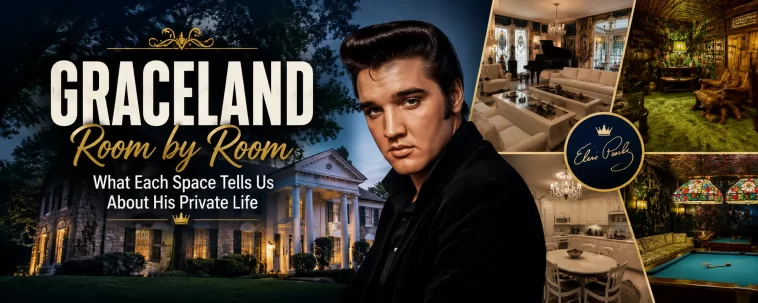
Graceland room by room tells a story that goes far beyond a famous mansion. It is not just a house; it is a snapshot of a life that shaped modern music and pop culture. Every room inside the home of Elvis Presley reflects a different part of his personality, habits, emotions, and private world. From bold décor choices to quiet personal spaces, the mansion reveals a human side of a global superstar.
Located in Memphis, Tennessee, Graceland has become one of the most visited music landmarks in the world. Yet behind the tour buses and cameras lies a deeply personal home that still feels surprisingly intimate when examined closely.
In this article, we’ll walk through Graceland room by room and explore what each space tells us about Elvis Presley’s private life.
The Meaning Behind Graceland Room by Room
When people think of Elvis Presley, they often imagine the stage, the jumpsuits, and the screaming crowds. But Graceland shows something different: a man who valued comfort, family, creativity, and sometimes even isolation.
Looking at Graceland room by room allows us to understand:
- How Elvis relaxed after fame
- How he spent time with family and friends
- How music was created in his personal space
- How his personality shaped interior design choices
Graceland is not designed like a typical mansion. It is emotional, expressive, and sometimes even chaotic—which reflects Elvis himself.
The Living Room: First Impressions of Fame and Comfort
The living room is one of the first major spaces visitors see, and it immediately sets the tone for Graceland room by room exploration.
This room is elegant but not overly formal. Elvis wanted guests to feel welcome, not intimidated. Soft seating, warm lighting, and a calm atmosphere make it clear that this was a social space.
What it tells us about Elvis:
- He valued hospitality
- He enjoyed conversation and gatherings
- He wanted fame at the door, but comfort inside
Despite being a global superstar, Elvis used this space like any other person would use a living room: to talk, relax, and connect.
The Music Room: Where Creativity Lived
One of the most emotionally powerful stops in Graceland room by room is the music room.
This space was not a grand recording studio. Instead, it was a casual environment where Elvis could play piano, sing, and experiment with ideas. Many spontaneous musical moments happened here.
Key characteristics:
- A piano placed in a relaxed setting
- Cozy seating for friends and musicians
- A focus on atmosphere over structure
This room shows that Elvis didn’t always need a stage. Sometimes, music was just something he shared in a quiet, personal setting.
It also reveals something important: creativity for Elvis was not scheduled—it was natural and constant.
The Jungle Room: The Most Famous Room in Graceland
No Graceland room by room journey is complete without the legendary Jungle Room.
This room is famous for its green shag carpet, carved wooden furniture, and exotic décor. It is bold, unusual, and unforgettable.
Originally intended as a casual den, it later became a recording studio for Elvis. Some of his final recordings were made here.
What the Jungle Room reveals:
- Elvis loved dramatic and unique design
- He was not afraid of bold personal expression
- Comfort mattered more than conventional style
The Jungle Room is often seen as symbolic of Elvis’s later years—creative, emotional, and deeply personal.
The Dining Room: Family and Tradition
The dining room at Graceland shows a different side of Elvis: the family man.
In the Graceland room by room experience, this space feels more grounded. It was used for meals with family, friends, and close guests.
Key features:
- Formal dining setup
- Warm, inviting atmosphere
- A focus on shared meals
This room reflects Elvis’s need for normalcy. Despite fame, he valued sitting down with people he trusted and sharing food like anyone else.
It also shows how important family gatherings were in his life, especially during holidays and special occasions.
The Kitchen: Behind-the-Scenes Simplicity
The kitchen is one of the most practical spaces in Graceland room by room, yet it reveals a lot about daily life.
Unlike glamorous Hollywood kitchens, this space was functional and busy. Staff worked here to prepare meals for Elvis and his guests.
What it tells us:
- Elvis had a strong support system at home
- Daily routines were structured
- Comfort food and late-night meals were common
This space reminds us that even a global icon depended on simple daily rhythms.

The TV Room: Elvis’s Escape Zone
One of the most personal areas in Graceland room by room is the TV room.
Elvis was known for watching multiple televisions at once. This room was his escape from public life, where he could relax and disconnect.
Key details:
- Multiple TV setups
- Dim lighting for relaxation
- A private, controlled environment
This room reflects Elvis’s need for solitude. After performing for thousands of fans, he often preferred silence, screens, and privacy.
It also highlights how fame can create a desire for controlled isolation.
The Upstairs Private Quarters (Restricted Area)
One of the most mysterious parts of Graceland room by room is the upstairs area, which is not open to the public.
This was Elvis’s private space, used for rest and personal life.
Even though details are limited, it is known that:
- It was strictly private
- Few guests were allowed
- It represented full separation from public life
This reinforces an important truth: even the most famous people need boundaries.
The Trophy Building: A Life of Achievement
The trophy building at Graceland is a celebration of success. It holds awards, gold records, and memorabilia from Elvis’s career.
In the Graceland room by room journey, this space shifts focus from personal life to global impact.
It shows:
- The scale of Elvis’s career
- His influence on music history
- Recognition from around the world
Yet, despite the fame displayed here, it still feels connected to the man behind the music.
The Meditation Garden: Reflection and Memory
Outside the mansion is the Meditation Garden, where Elvis and members of his family are buried.
This peaceful area is one of the most emotional parts of Graceland room by room.
It represents:
- Reflection
- Family legacy
- Peace after fame
Visitors often describe this area as deeply moving, because it contrasts so strongly with Elvis’s energetic public image.
The Racquetball Building: Work and Play Combined
Elvis built a racquetball court on the property that also served as a gathering space.
In Graceland room by room analysis, this area shows his love for activity and social life.
It was used for:
- Sports
- Social gatherings
- Informal entertainment
This space proves that Elvis didn’t only live in music—he also valued physical activity and friendship.
What Graceland Room by Room Tells Us About Elvis
When we step back and look at Graceland room by room, a clear picture emerges.
Elvis was:
- Creative and expressive
- Deeply social but also private
- Traditional in family values
- Unconventional in personal taste
His home reflects a balance between fame and normal life. One moment, you see bold design and music creation; the next, you see quiet rooms meant for rest and escape.
This contrast is what makes Graceland so fascinating.
Final Thoughts
Graceland room by room is more than a tour—it is a biography built in walls, furniture, and memories. Every space inside Graceland tells a story about Elvis Presley’s private life that you cannot fully understand from stage performances alone.
From the Jungle Room’s wild design to the peaceful Meditation Garden, Graceland remains a living reflection of one of the most influential figures in music history.
Even today, millions of visitors walk through these rooms not just to see a mansion, but to understand the human behind the legend.