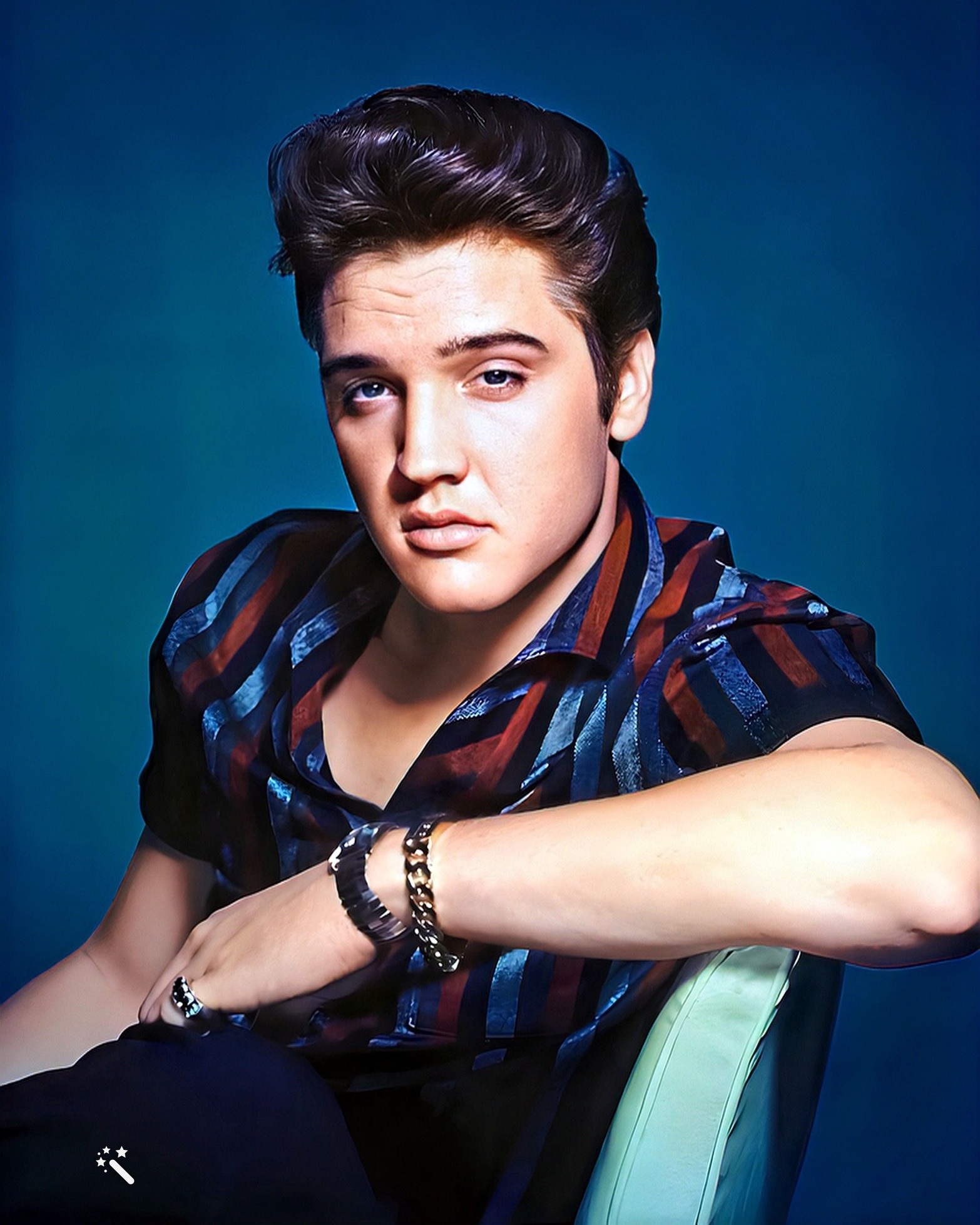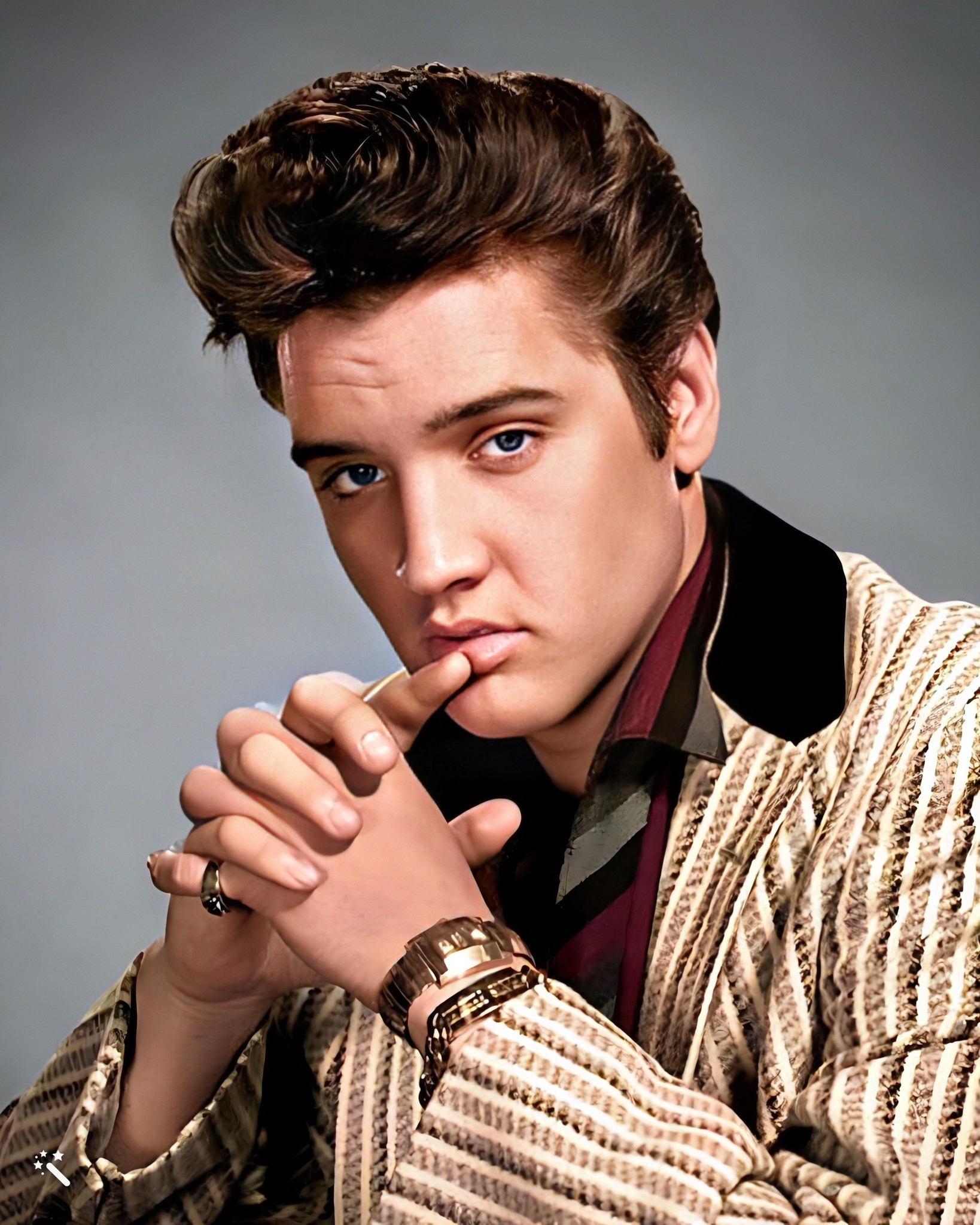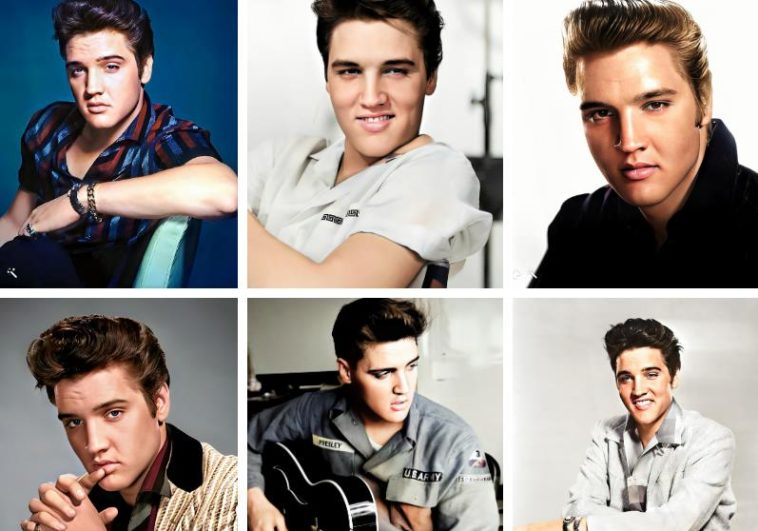
Today on his Birthday we celebrate Elvis Presley (1935–1977) who was an iconic figure in the realm of rock and roll. Known as the “King of Rock and Roll,” he left an indelible mark on the music industry and popular culture. With his dynamic stage presence, charismatic voice, and fusion of various musical genres, including rockabilly, rhythm and blues, country, and gospel, Elvis became a sensation. His influential style and innovative approach helped propel rock and roll into the mainstream, inspiring countless artists and shaping the future of popular music.
Elvis Presley’s meteoric rise to fame began in Tupelo, Mississippi, where he was born into modest circumstances. Displaying an early interest in music, he received his first guitar as a birthday gift at age eleven. This seemingly ordinary gift would set him on a path to become one of the most celebrated musicians in history. Elvis’s unique sound was a reflection of his diverse musical influences, from the soulful tunes of black gospel choirs to the energetic rhythms of bluegrass and country.
After signing with Sun Records in 1954, Elvis quickly gained attention with hits like “That’s All Right” and “Blue Moon of Kentucky.” His music defied categorization, blending elements of different genres in a way that was both fresh and familiar. But it wasn’t just his music that captivated audiences; it was his entire persona. His swiveling hips, flamboyant outfits, and signature pompadour hairstyle made him a cultural phenomenon, often eliciting strong reactions from fans and critics alike.
Elvis’s impact went beyond mere entertainment. At a time when America was steeped in racial segregation and traditional norms, Elvis challenged boundaries. By drawing inspiration from African American musicians and integrating their sounds into his music, he played a pivotal role in breaking down racial barriers in the entertainment industry. This fusion not only showcased the depth and breadth of American music but also promoted greater cultural understanding.
While his career was filled with numerous accolades and milestones, including a historic television appearance on “The Ed Sullivan Show” and blockbuster films like “Jailhouse Rock,” Elvis’s personal life was often tumultuous. Despite facing challenges, including his well-publicized struggles with addiction and his tumultuous relationships, his dedication to his craft never wavered.
Graceland, Elvis’s residence in Memphis, Tennessee, stands as a testament to his enduring legacy. Today, it serves as a museum, attracting fans from around the world who wish to pay tribute to the King. Presley’s influence is also evident in the myriad of artists who cite him as an inspiration, from rock legends like The Beatles and Led Zeppelin to contemporary stars across genres.
Decades after his untimely passing, Elvis Presley’s legacy remains as potent as ever. He is remembered not just as a musical icon, but as a trailblazer who forever changed the landscape of popular culture. His contributions to the world of music, his influence on fashion and style, and his undeniable charisma ensure that the “King of Rock and Roll” will forever remain a beloved figure in the records of history.
Elvis Presley’s story, from his humble beginnings in Tupelo, Mississippi, to becoming an unparalleled icon of music and culture, encapsulates a journey of extraordinary talent, influence, and an enduring legacy that continues to resonate worldwide.
Born on January 8, 1935, Elvis Aaron Presley’s early life in Tupelo was steeped in the hardships of a working-class family. His parents, Vernon and Gladys Presley, struggled financially but provided a nurturing home, deeply connected to their church. The gospel music Elvis heard and sang in church profoundly influenced his musical sensibilities from a young age. His first public performance, at just ten years old, was a hint of the star he was destined to become. He sang “Old Shep” in a youth talent contest, placing fifth—a humble beginning for a future legend. This childhood experience was pivotal, especially when he received his first guitar, a gift that ignited his lifelong passion for music.
In 1948, seeking better opportunities, the Presleys moved to Memphis, Tennessee, a city buzzing with a rich blend of blues, gospel, and country music. This diverse musical landscape was the perfect incubator for young Elvis’s talent. In Memphis, his distinctive style began to take shape, marked by his unique fashion sense, including his trademark sideburns and slicked-back hair.
Elvis’s career breakthrough came in 1954 with Sun Records. His recording of “That’s All Right” marked not just his first commercial release but also a seminal moment in the birth of rock and roll. His music, blending rhythm and blues with country and gospel, transcended the racial barriers of the time. Elvis’s stage presence, characterized by his enigmatic voice and sexually charged performances, made him a subject of both adulation and controversy.
Elvis’s ascent continued in 1955 when his contract was sold to RCA Victor. His ensuing hits, such as “Heartbreak Hotel,” “Hound Dog,” and “Jailhouse Rock,” became anthems of a generation and solidified his position as a cultural icon. His appearance on “The Ed Sullivan Show” in 1956 catapulted him to unprecedented national fame. Yet, his provocative style also brought him under the critical eye of a conservative society.
In 1958, at the height of his fame, Elvis was drafted into the U.S. Army, serving in Germany. This period was significant, not just for the pause it put on his career but also for personal reasons—it was here that he met Priscilla Beaulieu, who would later become his wife. After his military service, Elvis resumed his career with mixed success. His music remained popular, but his film ventures in the 1960s were often seen as lacking the artistic vigor of his earlier works.
The late 1960s marked a turning point for Elvis with the acclaimed 1968 “Comeback Special” on NBC. This televised concert, showcasing his musical roots and raw talent, reignited his career and passion for performance. Following this success, Elvis embarked on a series of concerts, including a notable residency at the International Hotel in Las Vegas, where his performances became legendary for their energy and charisma, marked by his iconic jumpsuits.
Elvis’s personal life was as dynamic and complex as his public persona. His marriage to Priscilla in 1967 and the birth of their daughter, Lisa Marie, were major events. However, their marriage ended in divorce in 1973, amidst the increasing challenges Elvis faced, including health issues compounded by his demanding tour schedule and prescription drug abuse.
On August 16, 1977, the world was stunned by the news of Elvis Presley’s death at his Graceland home. His passing marked the end of an era, but his legacy was far from over. Elvis’s impact transcended music; he became a symbol of the American dream and the transformative power of art. His influence is visible in the countless artists he inspired, the fans who adore him, and the cultural landscape he helped shape.