Fallout season two finale marks a turning point for the hit TV adaptation, pushing the series into unexplored narrative territory while surprising both fans and cast members alike. The shocking final reveal not only reshaped major characters but also redefined the future direction of the Fallout universe.
After a first season that carefully introduced audiences to Bethesda’s iconic post-apocalyptic world, Fallout season two took a far more ambitious approach. It expanded the map, deepened faction conflicts, and delivered character revelations that even the actors themselves did not see coming. As the dust settles on the finale, one thing is clear: Fallout is no longer simply adapting familiar material—it is actively building new canon.
A Bigger World After the Fallout Season Two Finale
One of the most notable achievements of Fallout season two was its expansion of the world beyond what fans expected. While season one focused heavily on establishing tone, setting, and Vault culture, season two leaned into the political and military consequences of life after nuclear devastation.
The return of New Vegas instantly raised the stakes. Longtime fans of Fallout: New Vegas recognized the significance of revisiting a city defined by fragile power balances and ideological conflict. The show didn’t just use New Vegas as fan service; it treated the location as a living battleground shaped by past wars and unresolved tensions.
The Fallout season two finale made it clear that New Vegas is once again on the brink of chaos. With Deathclaws no longer dominating the region, a power vacuum has emerged—one that multiple factions are eager to fill.
Fallout Factions Take Center Stage
A major highlight leading into the Fallout season two finale was the return of iconic factions. Caesar’s Legion and the New California Republic (NCR) both re-emerged with renewed purpose, reminding viewers why these groups remain central to the Fallout mythos.
The looming conflict teased throughout the season suggests what could become the largest faction war ever depicted in Fallout, whether in games or on screen. According to the show’s creative team, the idea was not simply to repeat past conflicts but to explore how these groups have evolved since the Battle of Hoover Dam.
Rather than presenting clear heroes or villains, the series frames the coming war as a clash of competing visions for rebuilding civilization. Each faction believes its ideology is the correct path forward, and the Fallout season two finale sets the stage for a brutal reckoning over who gets to define the future of the wasteland.
Personal Stories Drive the Fallout Season Two Finale
While large-scale conflicts dominate the world-building, the emotional core of Fallout season two lies in its characters. The finale delivered one of the most shocking personal twists in the series so far: the revelation that Hank MacLean and Overseer Stephanie were secret agents of the Enclave—and romantically involved before the war.
What made this twist especially effective was that it recontextualized everything viewers thought they knew about both characters. Hank, previously portrayed as a morally conflicted father figure, suddenly became tied to one of the most infamous factions in Fallout history.
Interestingly, Annabel O’Hagan, who plays Overseer Stephanie, revealed that she learned about this twist at the same time as the audience. Her surprise mirrors the shock many viewers felt, and she explained that not knowing a character’s full arc in advance can actually enhance a performance.
By allowing actors to discover revelations organically, the show avoids telegraphing future twists too early—something that often weakens long-form storytelling.
Memory Erasure and Reinvention
Another defining moment of the Fallout season two finale was Hank MacLean’s decision to erase his own memory to protect Enclave secrets. This choice raised profound questions about identity, responsibility, and redemption.
Kyle MacLachlan’s portrayal of Hank now enters completely new territory. With his past effectively wiped clean, the character has the opportunity to be rebuilt from the ground up. Rather than treating this as a narrative reset, the show frames it as a chance to explore whether someone can escape the consequences of who they once were.
From a storytelling perspective, this decision opens countless possibilities for season three. Hank could become an entirely different person—or slowly rediscover fragments of his past in ways that are even more damaging.
Barbara Howard’s Moral Complexity
The Fallout season two finale also redefined Barbara Howard, a character who had previously been positioned as a cold architect of destruction. Season two revealed that her actions were driven by blackmail and coercion rather than pure ambition.
This shift added much-needed nuance to Barbara’s story. Instead of a one-dimensional antagonist, she emerged as a tragic figure trapped by impossible choices. Frances Turner’s performance emphasized the emotional weight of being forced to sacrifice morality in the name of family survival.
By the end of the season, viewers are left questioning whether Barbara deserves condemnation, sympathy, or something in between. That moral ambiguity is one of Fallout’s greatest strengths, and the finale leans heavily into it.
The Ghoul’s Unexpected Evolution
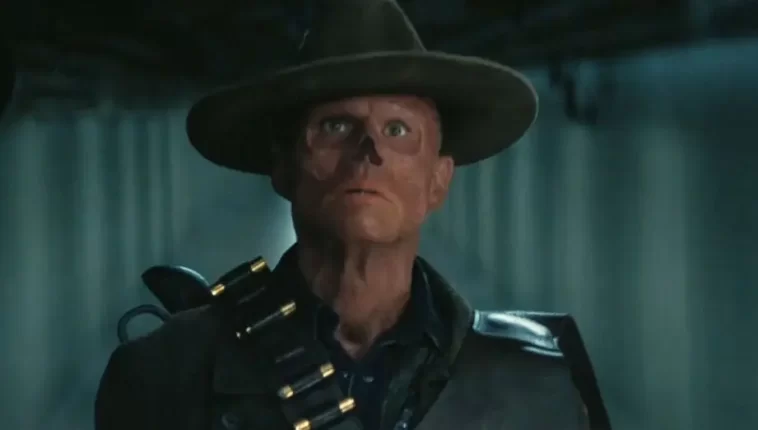
Perhaps the most quietly powerful arc leading into the Fallout season two finale belongs to Cooper Howard, also known as The Ghoul. For over a century, the character existed as a solitary survivor, emotionally detached and defined by loss.
Season two changed that dynamic. Through his growing bond with Lucy, The Ghoul was forced into sustained human connection for the first time in 150 years. According to Walton Goggins, this shift fundamentally altered how he approached the character.
The Fallout season two finale suggests that The Ghoul’s journey toward humanity is far from complete. His next destination—Colorado—represents both a physical and emotional frontier, especially as he searches for Barbara and his daughter.
Colorado and New Fallout Canon
Colorado’s introduction is one of the most significant outcomes of the Fallout season two finale. Outside of the non-canonical Fallout Tactics, the region has remained largely unexplored in official lore.
By choosing Colorado as the next major setting, the show gains creative freedom while still respecting the established universe. Todd Howard, who serves as executive producer on the series, has emphasized that the games and the show exist within the same world.
This approach allows Fallout to expand its canon in meaningful ways rather than simply retelling existing stories. Colorado offers new factions, environments, and moral dilemmas—perfect ingredients for a franchise built on choice and consequence.
What the Fallout Season Two Finale Means for the Future
The Fallout season two finale does more than conclude a storyline—it redefines what the series is capable of. The world is more unstable, the characters more fractured, and the moral lines more blurred than ever before.
Rather than relying solely on nostalgia, Fallout is carving out its own identity within the larger franchise. Season three now has the freedom to explore new regions, escalate conflicts, and deepen character arcs without being constrained by existing game narratives.
For the first time in years, Fallout feels truly unpredictable again.